

Quick Links:
- A practical guide to Operational Reviews and Planning for Australian clubs and pubs
- Where the pressure is coming from
- The compounding cost problem
- What Management teams should be asking
- What is an Operational Planning workshop?
- What should your Operational Plan address?
- Finding the balanced scorecard
- 6 Common mistakes venues make
- What an Operational Review can uncover
- What should come out of the workshop
- Key takeaways
- Take Control
A full car park, a busy bistro and an active gaming floor can make a venue appear successful. But activity does not always equal profitability.
Australian clubs and pubs are operating in a tighter market. Labour costs have increased, suppliers and overheads remain under pressure, and customers are more selective about where and how often they spend.
From 1 July 2026, award minimum wages increased by 4.75%, and the National Minimum Wage rose to $1,004.90 per week or $26.44 per hour. Under the Hospitality Industry (General) Award, an adult Level 1 employee is now $26.44 per hour for ordinary full-time or part-time hours, before applicable penalties and allowances.
Operational planning helps a club or pub identify where revenue is being lost, where costs are increasing and where departments are working against each other. A structured one-day workshop aligns management around market conditions, financial performance, departmental priorities and customer expectations, then converts the discussion into actions, owners and financial targets.
Venues are being squeezed between rising operating costs and cautious consumer spending. In June 2026, 55% of accommodation and food-service businesses reported higher operating expenses. Across all responding businesses, the most common causes included fuel, business overheads, freight and delivery costs, input costs and staffing costs.
On the cost side, clubs and pubs are managing:
- Higher base wages, penalty rates and employment on-costs
- Increased food, beverage, freight and supplier costs
- Higher insurance, energy, maintenance and contractor expenses
- Growing technology, cybersecurity and compliance costs
- Pressure to maintain and upgrade ageing facilities
On the customer side, venues compete for a smaller discretionary-spending pool against restaurants, cafés, home entertainment, sporting events, festivals, family attractions, online wagering and other leisure options.
The answer is not to increase every price or cut every cost. It is to understand where the venue can improve margins, reduce waste, lift productivity and deliver stronger value without damaging customer satisfaction.
A single increase may look manageable. The real problem is the compounding effect when wages, stock, utilities, insurance, repairs, freight and finance costs rise together.
A venue may need a higher gross profit margin than the previous year simply to maintain the same dollar profit. Last year’s percentage targets may no longer be sufficient.
A $1 million annual labour bill could increase by approximately $60,000 after the wage rise and superannuation, meaning the venue may need around $400,000 in additional sales just to break even, before allowing for penalties and other on-costs.
- Have departmental budgets been reset for current wage and supplier costs?
- Are menu, beverage and promotion margins still accurate?
- Are rosters aligned with actual demand by daypart?
- Which trading periods, spaces and products are genuinely profitable?
- Are promotions generating incremental spend or discounting existing behaviour
- Are departments working towards shared venue-wide targets?
What is an Operational Planning workshop?
An Operational Planning workshop is a focused one-day session that brings the management team together to assess the venue’s current position and agree on the actions required to improve performance.
DNS Specialist Services facilitates Operational Review workshops for community clubs, pubs and hotels. The session gives the team space away from daily service pressures to examine: Many clients will book our One-Day Operational Planning Workshops to get the management team together so we can cover everything and decide on strategies to improve.
Some of the key areas DNS SS will explore include:
- Current financial and departmental performance
- Local market conditions and competitor activity
- Wider hospitality and economic trends
- Cost and margin pressures
- Revenue and productivity opportunities
- Operational inefficiencies and duplicated effort
- Facility, maintenance and capital priorities
- Customer expectations and service impacts
- Management responsibilities and accountability
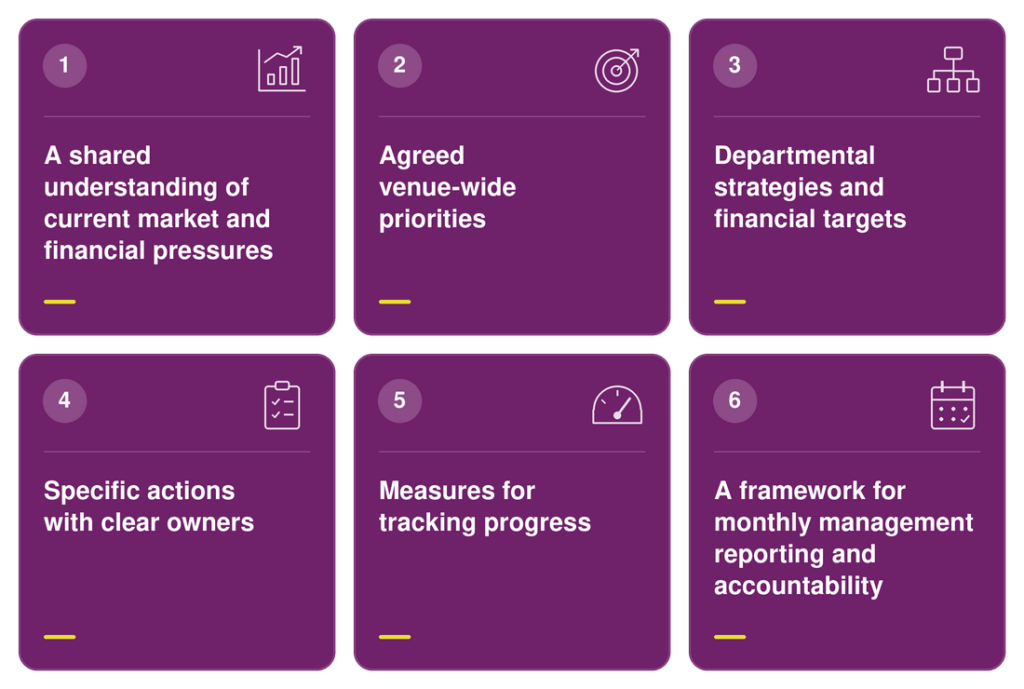
The purpose is not another lengthy plan that sits in a folder. It is a practical operating framework management can use to make better weekly and monthly decisions.
What should your Operational Plan address?
Every club and pub operates within a specific catchment. Changes in demographics, housing, employers, tourism, development and competitor investment can materially change visitation and spend.
- Who is using the venue now, and which customer groups are changing?
- What are competitors doing differently?
- Where is demand being underserved?
- How are price sensitivity and visitation patterns changing?
Each department can be busy while the venue still underperforms. Operational planning connects food and beverage, gaming, marketing, membership, finance, facilities and people priorities.
- Clear financial targets
- Defined performance measures
- Agreed priorities and actions
- Named owners and review dates
Management needs to understand what drives the result, not only total revenue or month-end profit.
- Revenue and contribution by department
- Gross profit, labour and cost-of-goods percentages
- Average spend and visit frequency
- Space and trading-hour utilisation
- Promotion costs and incremental return
- Forecast performance against budget
Cost control matters, but venues cannot cut their way to sustainable growth. Operational planning should identify practical ways to improve the return from existing assets and teams.
- Menu engineering and pricing
- Function and event utilisation
- Trading-hour and rostering changes
- Midweek visitation and member activation
- Gaming-floor performance
- Reduction of low-return discounting
- Improved service speed and transaction capacity
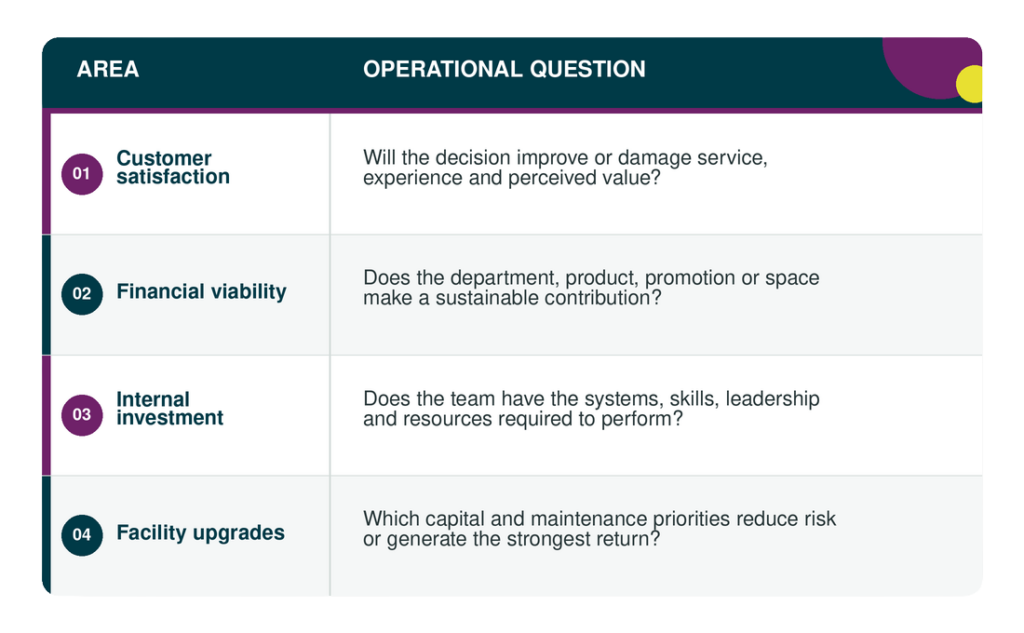
Finding the balanced scorecard
6 Common mistakes venues make
|
MISTAKES
|
WHY
|
|---|---|
|
Treating the budget as the Operational Plan
|
A budget sets the financial expectation. It does not explain how each department will deliver it.
|
What an Operational Review can uncover
An Operational Review provides a deeper assessment of how the venue currently performs across departments.
It can identify:
- Process gaps and duplicated work
- Unclear responsibilities and departmental friction
- Inefficient rostering and workflow
- Underperforming spaces or trading periods
- Weak reporting structures
- Missed revenue and member-engagement opportunities
- Inconsistent customer experiences
- Misalignment between strategy and daily operations
What should come out of the workshop?
Key Takeaways:
- Busy venues are not automatically profitable venues.
- Rising wages and operating costs can quickly erode departmental margins.
- Venues may require a stronger margin than last year simply to maintain profit in AUD.
- Operational planning should balance customer satisfaction, financial viability, internal investment and facility upgrades.
- A practical plan aligns management and gives leaders control over the decisions affecting revenue and profitability.
Explore our other products

Read more articles

Building a Strategic Plan That Gets Used

Your venue is unique. Your App should be too.

Your Venue Is Busy. But Is It Profitable?
Strategic Planning for Hospitality Venues: 4 Reasons Your Strategic Plan Will Fail
Is Your Venue Still Using Messenger for Internal Comms? Here’s Why It’s Time to Level Up

Is Managing Your Team the Toughest Role at Your Venue?