
Building a Strategic Plan That Gets Used
Quick Links: Building a Strategic Plan that gets used What is the role of a Strategic Plan? From discussion to direction What should a Strategic Plan achieve? How does DNS Specialist Services facilitate Strategic Planning? Why use an external Strategic Planning facilitator? Building a Strategic Plan that gets used Contact DNS SS for more information Building a Strategic Plan That Gets Used Clubs and hospitality venues are planning for the future in an increasingly complex environment. Operating costs continue to rise. Member and customer expectations are changing. Communities are evolving and competition for people’s time and spending is increasing. At the same time, Boards are being asked to make significant decisions about facilities, investment, financial sustainability, governance and the future position of their venue. These decisions cannot be made in isolation. A well-developed Strategic Plan turns those conversations into agreed priorities, measurable goals and a clear framework for future decision-making. Where should the venue be positioned in three, five or ten years? Which opportunities should be prioritised? Where should the venue invest? What needs to change to remain relevant to members and the broader community? What is the role of a Strategic Plan? A Strategic Plan sets the organisation’s future direction and priorities. It helps maximise future opportunities, respond to change and minimise the risk of lost opportunities. Importantly, it provides continuity and consistency in direction, reducing the risk of major strategic shifts when Board members change. It gives management clear guidance on the organisation’s priorities and should be reviewed at least every two years to ensure it remains relevant. The Board sets the direction. The Strategic Plan maintains the direction. Management delivers it. Importantly, a Strategic Plan is different from an operational plan. The Strategic Plan establishes the organisation’s direction and Board-level priorities. The Operational Plan then sets out how management and individual departments will develop specific marketing, loyalty, service and community initiatives to support that direction. This connection between strategy and operations is critical. Without it, departments can be busy delivering projects and activities without a clear understanding of how their work contributes to the venue’s broader goals. Strategic Plan Establishes the direction and priorities. Focus on Membership growth & engagement. Management develops specific marketing, loyalty and service initiatives to support the direction. Operational Plan Takes the strategic goal and turns it into action – specific initiatives, responsibilities, timelines and measurable targets for management and each department. From discussion to direction Most Boards and management teams are not short of ideas. There are often many opportunities and challenges at hand all at the same time. The challenge is deciding which priorities matter most. Without a structured Strategic Planning process, discussions can move between competing ideas without reaching clear agreement. Immediate issues can take over the conversation, longer-term decisions can be deferred and individual priorities can begin to pull the organisation in different directions. A Strategic Plan brings these discussions together. It creates the opportunity for the Board and Management team to step away from day-to-day matters, consider the bigger picture and agree on the venue’s future direction. Venue Opportunities Refurbish facilities Reposition the Venue Improve Memberships New revenue Streams Strengthen Governance Invest in Technology Venue Challenges Financial performance Changing Demographics Ageing Facilities Community Relevance Internal Conflicts Plan Execution issues The value of a Strategic Plan is not the document, but the clarity, alignment and decision-making framework created through the planning process. What Should a strategic plan achieve? A practical Strategic Plan should help your venue: Define its long-term direction and desired future position Establish a small number of clear strategic priorities. Align the Board and management team around shared goals. Guide major decisions, investment and resource allocation. Balance financial, member, community and operational considerations. Set measurable objectives for monitoring progress. Give management a framework for developing operational and departmental plans. Communicate the organisation’s direction throughout the wider team. Rather than considering every proposal as a separate decision, the Board can ask whether the opportunity supports the agreed strategic direction, which priority it contributes to and whether it should take precedence over other investments. This creates greater consistency and discipline around decision-making. How does DNS SS facilitate strategic planning? DNS Specialist Services works with Boards, committees and management teams to develop practical Strategic Plans for clubs and hospitality venues. The process is tailored to the individual venue, its current position and the decisions it needs to make. It generally includes preparation and research, followed by a focused one or two-day Strategic Planning workshop. Our facilitators bring structure, objectivity and hands-on industry experience to the process. We guide the discussion, challenge assumptions where needed and help the group move from broad ideas towards agreed priorities and measurable goals. The workshop may explore: The purpose is not to create an unrealistic wish list. It is to establish a clear and achievable direction that reflects the venue’s ambitions, resources and commercial realities. Following the workshop, DNS prepares a Strategic Planning Report outlining the agreed direction, strategic priorities, goals and recommended measures. This gives the Board a clear framework for future decisions and gives management the direction required to develop supporting operational plans. Why use an external planning facilitator? An experienced external facilitator can help: Keep the workshop focused on strategic rather than operational matters. Ensure different Board and management perspectives are heard. Challenge assumptions and test the thinking behind proposed priorities. Provide an independent perspective on the venue’s position. Contribute broader insights from across the club and hospitality industry. Turn broad ambitions into clear priorities and measurable goals. Establish a practical structure for accountability and future reporting. Because DNS works across Strategic Planning, Governance, Gaming, Membership, Loyalty, Marketing, People and Culture, Systems and broader venue operations, we understand how Board-level decisions affect the entire organisation. We also understand that a strategy must work beyond the boardroom. It needs to guide decision-making, provide direction for management and create a clear connection between the venue’s long-term goals and the work being delivered throughout the business. Building a strategic plan that gets used A successful Strategic Plan does
Your venue is unique. Your App should be too.
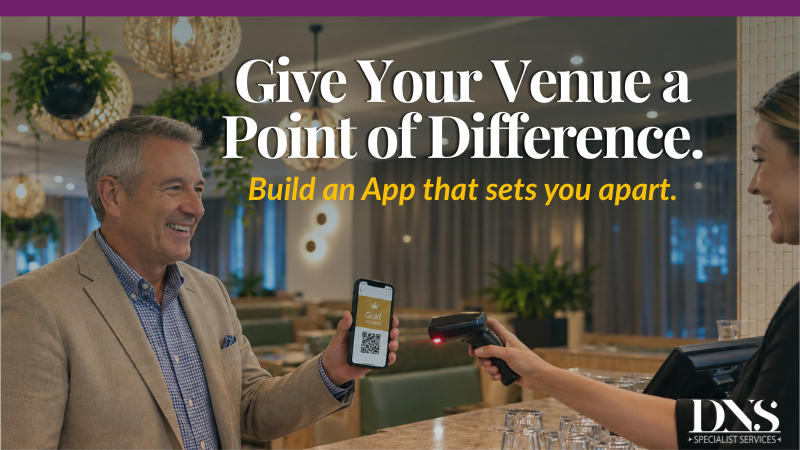
Four things a venue app should never be: 1 – a logo swap in a re-used template 2 – a digital dead end 3 – another platform members forget to open 4 – a headache for your staff and patrons to be able to navigate There is no shortage of mobile apps available to hospitality venues. But there is a big difference between an app that simply carries your venue’s colours and logo, and one that is genuinely designed around your members, systems and business goals. Enhancing your digital experience for your customers needs to reflect your unique brand proposition, and unfortunately many venues are falling into the trap of offering their members the same experience as their competitor. This is where a genuinely customised approach makes the difference – giving venues the opportunity to improve the member experience while expanding how, when and where they can engage with their audience. Investing in a customised mobile app is one of the smartest ways a venue can strengthen member engagement, create a smoother patron experience and encourage repeat visitation. The right app should feel like a natural extension of how your patrons move within the club, not just another forgotten icon cluttering their phone. What can a customised app actally do for your venue? Make joining easier. A customised online membership sign-up can remove unnecessary friction at exactly the moment a patron decides to join. Members can simply scan a QR code linked directly to your venue’s membership system, complete their registration and access their digital membership card. Reducing paperwork and manual data entry for staff, whilst creating a smoother experience for the member. All the information in one place. The app aims to centralise the venue information into a platform that pushes through to members, greatly increasing patron engagement. This is especially effective when compared to a static website or social media page that requires the customer to visit independently. Local-inspired Functionality. The app can be customised to collate localised information that is relevant for your area. One example is a local fuel pricing feature, which only further increases it’s usefulness to your patrons. Broaden your digital reach. A customised app gives your venue another direct channel for communication, marketing and promotion. Rather than relying heavily on one platform, such as SMS, email or social media. You have another way to reach members and keep your venue front of mind. Some Key features of the Apps Ok we’re interested, how does the process work? Our DNS team will work closely with our client to collaborate on ideas and help you develop your customised app and what it could achieve for your business. One of the key benefits of working with DNS is that whilst we create the app for your venue and can help maintain it, your Venue is in control of what features or inclusions they want and have ownership of the app. Our app designers are in-house, giving us full flexibility to create features and functionality that support how your business actually operates. Rather than making your venue fit around an app, we build the app around your venue. We’ll work with you to identify opportunities, improve system integration and create a solution aligned with your venue’s goals. Ready to start a conversation about Apps? Ready to stand out? Ask us how about what we can create for your venue. Facebook Instagram Linkedin Explore our other products Read more articles
Your Venue Is Busy. But Is It Profitable?

A full car park, a busy bistro and an active gaming floor can make a venue appear successful. But activity does not always equal profitability. Australian clubs and pubs are operating in a tighter market. Costs have increased. Operational planning helps a venue identify where revenue is being lost. Would your venue benefit from an Operational Review & Planning Workshop?
Strategic Planning for Hospitality Venues: 4 Reasons Your Strategic Plan Will Fail
Most hospitality venues have a strategic plan. The problem is that many of them sit in a drawer, get discussed once a year, and have little impact on the day-to-day decisions that drive performance. A strategic plan should not be treated as a compliance document. Done well, it becomes a practical roadmap that guides investment, operations, growth and decision-making across the entire venue. At DNS Specialist Services, we work with hospitality boards, committees, CEOs and management teams to develop practical Strategic Plans that are commercially focused, evidence-based and built for implementation. 1. You’re planning activities instead of outcomes One of the biggest mistakes venues make is confusing projects with strategy. Renovating a gaming room, upgrading a website, introducing a new menu or launching a member app may all be worthwhile, but they are only strategic if they are tied to a clear outcome. The real question is not simply “what are we doing?” It is “what result are we trying to achieve?” That may include increasing visitation, growing food and beverage revenue, improving member retention, diversifying income or reducing reliance on gaming. DNS helps venues move beyond a list of projects and define the outcomes that should guide investment, operations and decision-making. 2. Your strategic plan is not backed by data Too many strategic plans are based on opinions, assumptions or the loudest voice in the room. Effective planning starts with evidence. Before setting priorities, venues should understand their current position, market opportunity and operational constraints. That often means reviewing: This is where DNS supports venues through Strategic Planning, Feasibility Studies, Operational Reviews, Financial Analysis and Master Planning, helping boards and management teams make decisions with confidence rather than guesswork. For venues considering a new strategic direction, DNS can help test assumptions, identify opportunities and turn evidence into a clear planning framework. 3. Your board and management team are not aligned A strategic plan only works when the people responsible for governance, leadership and delivery are pulling in the same direction. We often see boards focused on capital projects, management focused on immediate operational pressures, and individual departments pursuing their own priorities. A strong strategic planning process creates shared clarity around vision, priorities, investment and measurement, so the whole organisation understands where it is heading and what matters most. DNS facilitates this process with boards and management teams to build alignment before the plan is finalised, not after momentum has already been lost. 4. There is no roadmap for execution This is where many strategic plans fall apart. A document is produced, approved and endorsed, but without clear ownership, timeframes, budgets, reporting mechanisms and accountability, the strategy becomes an annual discussion rather than a management tool. DNS helps venues translate strategic priorities into practical actions, with clear responsibilities and milestones that can be tracked over time. That is also where Board360 can add real value. With features including a Strategic Plan Tracker, meeting planner, agenda and minutes builder, real-time collaboration and document control, Board360 helps boards and management teams keep strategy visible and connected to regular governance activity. Instead of reviewing the strategic plan once a year, venues can use Board360 to monitor progress, assign accountability and keep strategic priorities front of mind. To explore Board360, visit: https://dnsss.au/services/governance/board360-coporate-governance-portal/ The most successful hospitality venues connect planning, evidence and execution. Strategic Planning defines the long-term direction. Feasibility Studies test opportunities before major decisions are made. Master Planning turns priorities into a practical delivery pathway. Board360 helps keep progress visible, measurable and accountable. For venues reviewing their future direction, the key questions are simple: If the answer to any of these is unclear, it may be time to review whether your strategic plan is truly guiding your venue’s future. DNS Specialist Services works with community clubs, pubs, casinos and hospitality groups across Australia to develop commercially focused Strategic Plans that align vision, investment and execution. To start the conversation, visit: https://dnsss.au/services/planning/strategic-planning/
Is Your Venue Still Using Messenger for Internal Comms? Here’s Why It’s Time to Level Up
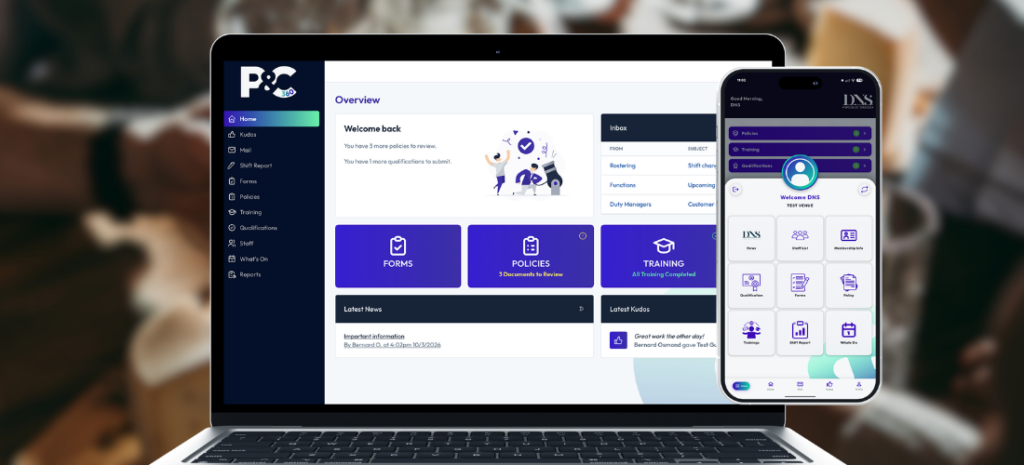
Are you still using Messenger to communicate with your team? For many venue managers, it is a habit that starts out of necessity. You need to send a quick update about a weekend shift, share a new policy, or remind staff about a training session. A group chat is free, fast, and everyone has it on their phone. It feels like the path of least resistance. However, as any General Manager or HR lead in the Australian hospitality industry knows, what starts as a convenience often evolves into a source of frustration. Important information ends up spread across too many platforms. Shift updates sit in Messenger. Onboarding paperwork lives in spreadsheets. Policies are printed and stored in folders. Compliance reminders go out via email. Managers are constantly switching between systems just to stay on top of the basics. In an industry where the pace is relentless and staff roles can change quickly, this disconnected approach does not just create extra admin work. It creates gaps in communication and training that can affect the entire team’s performance. Why hospitality needed a better solution The challenge isn’t a lack of tools. It’s that most tools were never designed for how venues actually operate. Managers needed a way to capture information once and know it would stay organised. They needed a simple way to onboard staff properly, track training without chasing people, and make sure important updates weren’t lost in a chat thread. The reality is that when communication, training and compliance are handled across multiple systems, things slip through the cracks. Staff miss updates. Managers spend too much time following up. And small problems turn into bigger ones. Centralising the staff experience The difference with P&C360 is felt in the day-to-day operations of the venue. Instead of wondering if a casual staff member saw an important update in a crowded Messenger thread, managers can communicate clearly and ensure messages are actually acknowledged. Key benefits for GMs and HR Managers include: A calmer, more professional workplace The true value of P&C360 is not just in the software features. It is in the shift toward a more organised team environment. When a team has a dedicated professional platform, they feel more supported and better informed. It removes the small, daily frustrations, such as lost messages or missing documents, that often lead to staff burnout. For the manager, it means less time following up on basic tasks and more time on the floor leading the team. If you are still relying on Facebook Messenger to manage your venue’s most valuable asset, your people, it may be time to ask if that system is still the right fit for your business. Modern hospitality requires a more structured approach to team management. If you are ready to see how a purpose-built platform can transform your operations, contact us for a free demo and explore what People & Culture 360 can do for your venue.
Is Managing Your Team the Toughest Role at Your Venue?

In hospitality, people are the business. Yet for many venue managers and operators, managing teams has become increasingly complex and often more administrative than operational. Beyond leading service and customer experience, managers are expected to stay across training records, compliance documentation, internal communication, policies, procedures, and day to day accountability. Much of this still relies on a mix of paper files, spreadsheets, inboxes, shared drives, and informal messaging channels. The result is familiar across the industry. Late nights searching for RSA or First Aid certificates, uncertainty around who has completed mandatory training, and important updates lost in group chats or email threads. This isn’t just inconvenient. It creates real operational drag. The Hidden Cost of Administrative Overload When people and compliance systems are fragmented, managers spend a disproportionate amount of time chasing information, tracking sign offs, and managing risk manually. That time comes at the expense of coaching staff, improving performance, and being present on the floor. Disconnected systems also increase exposure to compliance gaps, inconsistent processes, and communication failures. All of these can impact service standards, staff engagement, and ultimately profitability. In a high turnover, fast paced industry like hospitality, clarity and consistency aren’t luxuries. They are operational necessities. Shifting from Reactive Administration to Proactive People Management Effective people and culture management depends on having the right structure in place. Systems should support managers, not slow them down. P&C360 is a secure web and app based platform built specifically for hospitality environments. It brings key people management functions into a single, centralised system, reducing administrative friction and improving visibility across teams. Key capabilities include: Training and Compliance Oversight Managers can view training records and qualifications in real time, identify upcoming expiries, and understand skill gaps across the venue. This simplifies compliance management and supports workforce planning. Centralised Policies and Procedures All policies, procedures, and handbooks are stored securely in one location. Read acknowledgements are tracked automatically, creating a clear audit trail and shared understanding across the team. Targeted Internal Communication Operational updates can be sent to specific teams or roles, ensuring information reaches the right people and is acknowledged, rather than being lost in informal messaging channels. Operational Consistency and Accountability Digital checklists, forms, and workflows support consistent execution of daily tasks such as openings, closings, shift handovers, incident reporting, and maintenance requests. Information is captured cleanly and remains accessible when needed. Supporting Performance, Engagement, and Retention When managers are relieved of unnecessary administrative burden, they can focus on leadership, developing their people, improving standards, and strengthening culture. For employees, clear expectations, accessible information, and consistent processes create confidence and engagement. Teams know what is required, where to find support, and how to operate effectively within the venue. Over time, this structure supports stronger performance, reduced risk, and a workplace where people are more likely to stay and grow. P&C360 supports hospitality venues in turning people management into a strategic capability rather than an ongoing frustration. For more information on how P&C360 can support your venue’s people, compliance, and operational performance, contact info@dnsss.au.
Beyond the Headlines: Why This March 31 Matters More Than Ever

If it feels like the word “AUSTRAC” has been on repeat for the last six months, you aren’t imagining things. For the latter half of 2025, regulatory reform has dominated the news cycle, moving from niche industry discussions to mainstream headlines. But while the media buzz has focused heavily on the what and the when of these reforms, there’s a more pressing question for General Managers and Boards: Are we actually ready? March 31 is fast approaching, a date that is circled in red on every compliance calendar. Traditionally, this is simply the deadline for lodging your Annual Compliance Report. This year, however, it carries far more significance. With the reforms announced in August and the rolling changes throughout late 2025, lodging your report is no longer a routine administrative step, it’s a statement of your venue’s compliance and integrity. Regulators now demand proof, not promises. A policy on a shelf doesn’t satisfy today’s standards. Compliance programs must be actively managed, fully understood by staff, and clearly effective at preventing financial crime. Completing your Annual Compliance Report is no longer a routine task, it is a public declaration of your venue’s integrity. Without independent validation, even small gaps can become serious breaches. This is where the Independent Audit becomes your most valuable tool. The Compliance Report captures your venue’s compliance on paper, but the Independent Audit ensures it stands up in practice. By reviewing systems and processes against current legislation, an audit highlights areas for improvement before they escalate into compliance breaches, giving Boards and management confidence in their program’s effectiveness. If you haven’t locked in your Independent Audit yet, the window is closing. March 31 will be here before we know it, and the last thing anyone needs is a rush to the finish line. At DNS Specialist Services, we make this process seamless. We help you navigate the complexity of the new reforms and provide the independent assurance you need to sign your reports with total confidence. If you haven’t already engaged an auditor, now is the time to reach out. Take one minute to send us an email at info@dnsss.au, or reach out below, and we’ll take care of the rest.
Strategic Planning: How to Turn Motion Into Real Progress

In the hospitality industry, “busy” is often worn as a badge of honour. We confuse full calendars and tired feet with progress. But there is a difference between movement and direction. You can run at a million miles an hour, but if you’re running in a circle, you’re just burning fuel. For many venues, the day-to-day challenges of staffing, supply chains, compliance, endless operational demands can absorb every bit of energy. It’s no wonder so many leadership teams find themselves reacting rather than steering. Strategic planning is the discipline of stepping off the treadmill. It’s the moment you lift your head above the noise and check that all the hard work is taking you somewhere new. Real progress begins with clarity. When your Board sets a sharp, meaningful vision, it becomes a compass for the entire organisation. Your mission and values transform from words on a wall into the filter that shapes decisions, behaviour and culture. And when your team is aligned and confident, customers feel it the second they walk through the door. Meanwhile, the world outside your venue is shifting, and fast. You’re no longer just competing with the club or restaurant down the road. You’re competing for a slice of someone’s leisure time. Whether it’s dining out, hitting a festival, or staying home with Netflix, the battle for “share of wallet” has become a battle for attention and relevance. Staying ahead requires thinking creatively, which is difficult when your focus is, rightly, on daily operations. That’s where collaboration becomes a catalyst. Partnering with external specialists brings fresh perspective, future-focused thinking and the freedom to challenge assumptions. Combine that with your team’s passion and deep knowledge of your venue, and you unlock a strategic force that can genuinely move the needle. This kind of approach also reshapes how you show up in your community. Many venues are doing extraordinary work supporting local sport, backing charities, and hosting events, yet much of it goes unseen. A strong strategy helps you own your narrative and positions your venue not just as a facility, but as a vital part of the community fabric. It’s also about resilience. Leaning on a single revenue stream is a risk modern venues can’t afford. From repurposing unused spaces to embracing smarter technology, diversification is what turns a good year into a sustainable future. If your current strategic plan feels like it belongs to another era, it may be time for a reset. Strategy shouldn’t be a document that gathers dust, it should energise your Board, inspire your team and guide every step forward. Let’s stop running in circles and make 2026 the year your momentum finally matches your direction. If you’re ready for a fresh perspective, we’re here to help: info@dnsss.au
We’re Hiring – Marketing Manager

DNS Specialist Services is a consultancy firm dedicated to the Australian hospitality, gaming and leisure industries. We’re an energetic, passionate team who live and breathe hospitality. We pride ourselves on generating real outcomes for our pub, club and casino clients across QLD, NSW, VIC, TAS and NT – and with our portfolio growing rapidly, we’re ready to expand our leadership team. We’re looking for a Marketing Manager who can combine strategic thinking with hands-on marketing expertise, and who thrives on building relationships with clients while guiding a talented team to deliver great results. What you’ll be doing As a Marketing Manager, you will: This is not just a “make the posters and send the emails” role – it’s about consulting with clients, managing accounts, and steering strategy while still staying close enough to the creative to keep things fresh and fun. What you’ll bring What you can expect If you’re ready to step into a role where you’ll drive strategy, manage client relationships, and lead a growing marketing team, we’d love to hear from you. Send us your CV and a cover letter showing us why you’re the Marketing Manager we’ve been waiting for!
When Data Governance Becomes a Boardroom Challenge

In today’s digital-first environment, data is both the most valuable and the most vulnerable asset in the boardroom. Boards are increasingly tasked with overseeing not just strategy and performance, but also the governance of data, its use, security and ethical management. For many organisations, challenges around data significance and confidentiality remain hidden until a crisis emerges: a breach, a regulatory fine or reputational damage. At that point, the problem is no longer technical, it is strategic. Boards suddenly find themselves answering to regulators, stakeholders and the public. Why Boards Struggle With Big Data According to the Data Governance Foundations for Boards report, directors often underestimate the risks. The sheer speed at which data is generated makes oversight complex. Not all data is created equal, but without effective governance, critical data is treated the same as trivial information. Policies and procedures are too often written in response to incidents rather than as a preventative safeguard. On top of this, departing board members may still retain access to sensitive data and reports, exposing the organisation to long-term risks if proper offboarding is not in place. This mindset of “it is not a problem until it becomes a problem” remains one of the greatest challenges boards face. The Case for Proactive Planning A proactive approach ensures that boards do not simply react but lead. This means establishing clear policies and procedures that define roles, responsibilities and accountability. Regular audits should be conducted to identify vulnerabilities before they escalate. A culture of data stewardship needs to exist at both executive and operational levels, and governance must be aligned with both regulatory compliance and community expectations. Just as importantly, sensitive data must be secured during board transitions, ensuring that vacating members no longer retain access to reports, strategy documents or confidential datasets. How DNS Specialist Services Helps At DNS Specialist Services, we specialise in supporting boards to strengthen their governance and oversight. We provide independent data governance audits, assist in writing policies and procedures tailored to your business, and offer practical guidance to directors so that they can meet their obligations with confidence. We also implement secure offboarding protocols for vacating board members, ensuring that confidential information does not walk out the door. We do not just help you “tick the box”. We help you build a governance framework that reassures stakeholders, protects your organisation, and allows the board to focus on strategy with confidence. If your board has not yet addressed data governance at this level, the best time to act is now before it becomes a problem. Contact DNS Specialist Services today to start the conversation.